
How Did It Start?
An approach created by a secondary school, for secondary schools.
Connecting Through Colour is the result of a doctoral study into metaemotion at the University of Cambridge. Just as metacognitive approaches support students to develop an adaptive relationship with their learning, metaemotional approaches support students to develop an adaptive relationship with their emotions. The research was made possible through the generosity of the staff, students, and parents of a mainstream secondary school in England. Deep gratitude is also owed to the school’s senior leadership team, whose encouragement and support sustained the study throughout.
Between 2022 and 2025, staff, students, and parents from the school community trained as co-researchers to co-create an inclusive approach to social and emotional teaching and learning for secondary schools. This approach—Connecting Through Colour—is rooted in the lived experiences of its co-creators, who kindly and bravely shared both their hearts and their minds.
What Is It?
Connecting Through Colour is a whole-school approach to metaemotion. It uses colour as the mechanism for dialogue, thinking and reflecting about emotions. This one simple, unifying idea makes it easy to embed across the school, providing a shared language that runs through curriculum, pastoral support, restorative practice, and mentoring. Rooted in the understanding that emotions are shaped by our neurology, social environment, and lived experiences, it recognises that we are emotionally diverse by design. By using colour as a consistent thread, the approach enables pupils and staff to recognise, share, and understand emotions in accessible and inclusive ways. It celebrates neurodiversity and ensures every individual feels recognised, valued, and connected.
The approach aligns with the renewed Ofsted Education Inspection Framework by embedding inclusion, wellbeing, and pupil voice into everyday practice. It provides schools with a practical way to evidence how they reduce barriers to learning, foster emotional literacy, and promote personal development, while building inclusive and emotionally informed learning environments.
Education inspection framework: for use from November 2025 – GOV.UK
Why Colour?
Humans have a long history of using colour for social and emotional communication. Some scholars even argue that our use of colour offered the foundations for the evolution of language (Rifkin, 2012). Today this colour-emotion association remains in art, in literature, and in film, as has been popularised by Disney’s Inside Out films, and Llena’s Colour Monster book series. Colour has been well established as a tool for untangling emotions in therapeutic work, for example Plutchik’s wheel of emotions (1980).
But there is a even more fundamental reason why colour underpins this approach. If we want to create connected school communities, we need to understand emotions differently. Neuroscientist Lisa Feldman Barrett’s research shows that emotions are not fixed or universal reactions. Instead, each emotion is constructed in the brain of the perceiver, shaped by body signals, context, and past experiences. This means that emotional diversity is normal and inevitable—no two people will feel or express emotions in exactly the same way. You can read more about Barrett’s work here: Lisa Feldman Barrett | Neuroscientist, Psychologist, and Author.
In her writing, Guggenheim fellow Dr Barrett offers colour as a helpful way to think about emotions. Just as light is continuous but our brains construct “red,” “blue,” or “green,” emotions are continuous feelings that we categorise into concepts like “angry,” “worried,” or “proud.” Different cultures even divide colour differently—and emotions work the same way. Our brains make sense of emotions using the concepts we’ve learned in our communities.
This shift matters for schools. Far from being an excuse for behaviour, Barrett’s theory shows that by learning about our emotions, their construction in the brain, and their relationship with our bodies, we can claim more agency over them. When staff and students connect with their own emotional worlds—naming, noticing, and making sense of what they feel—they gain more choice in how to act. This builds ownership, strengthens connections to self and others, and reduces conflict. You can watch Dr Barrett explain this idea in her TED Talk here: https://youtu.be/0gks6ceq4eQ.
Most importantly though, Barrett argues that emotions are our social reality. To ignore or dismiss our own – or someone’s – feelings is to deny the reality of the moment, creating disconnection and disengagement. But when we recognise emotions as real, valid, and necessarily diverse, we open the door to understanding, cooperation, and connection. That’s why schools that embrace emotional diversity don’t just improve behaviour—they create connected communities.
So How Is It Different?

Connecting Through Colour uses colour in a dynamic and metaphorical way. Rather than fixing specific emotions to a particular shade, colour becomes the medium and stimulus for exploring our emotional world. It offers a flexible, shared language that everyone in the school community can use, while leaving space for individual interpretation and diversity of experience.
Because colour is open and fluid, it encourages reflection rather than categorisation. This helps staff and students to tune into their own emotions, imagine the feelings of others, and notice how emotions interact across the wider school. Over time, this practice supports the development of new emotion concepts, expanding our vocabulary and understanding, and leading to a richer and more nuanced emotional world.
‘Colours are fun, colours are what the kids need.’
Staff co-researcher 2024
Who Is It For?
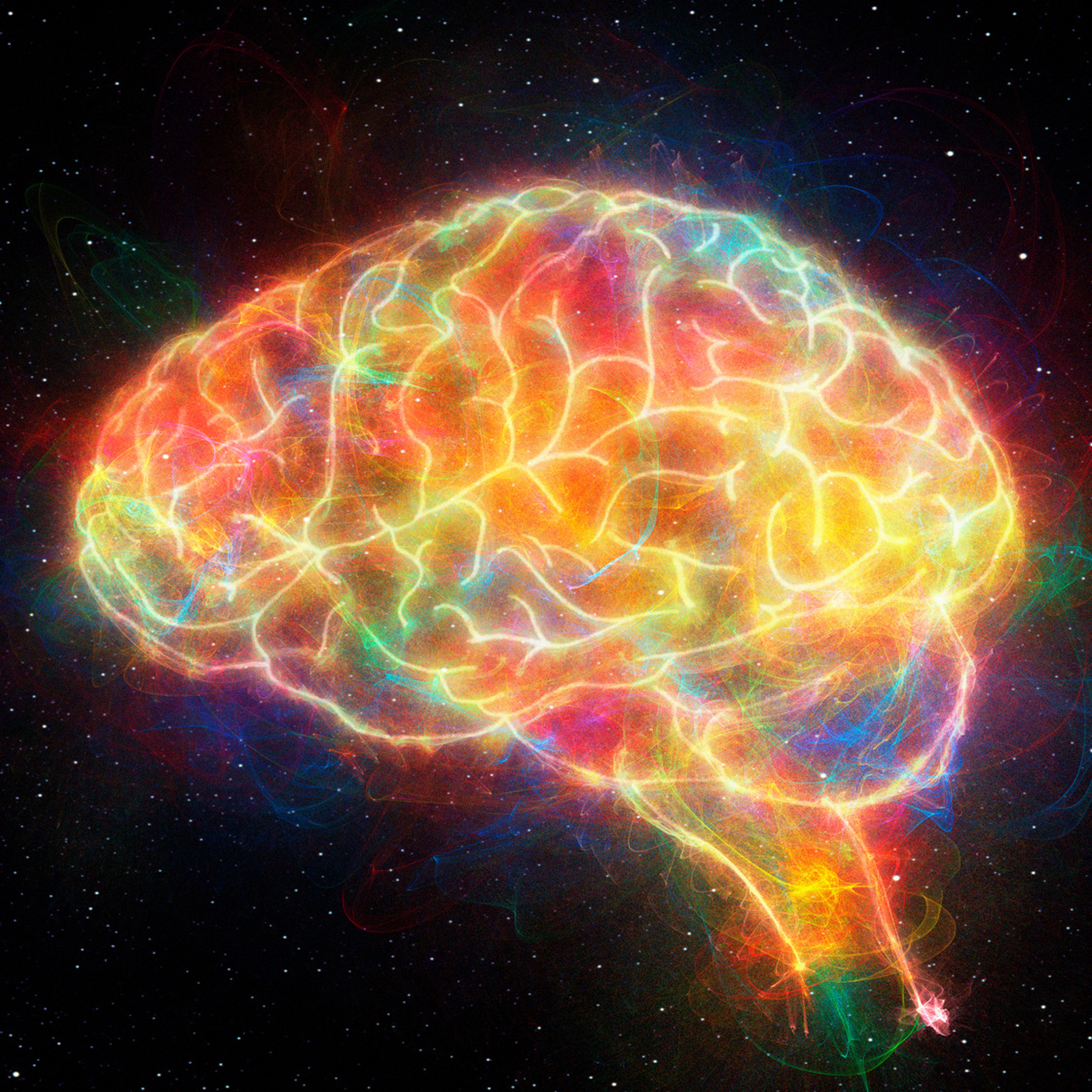
Connecting Through Colour has been designed for secondary schools. Adolescence brings intense emotional change and significant emotional growth. Dan Siegel calls this the “Emotional Spark” – a surge of intensity that fuels creativity and openness, but can also lead to overwhelm without support. Fordham (2025) describes puberty as a rupture of the child self and the fragile beginning of a new identity, meaning adolescents are especially in need of connection even if they cannot always ask for it. When we pay close attention to students’ emotions and offer consistent connection, we provide the safety young people need to grow with confidence and resilience.
How Do We Do It?
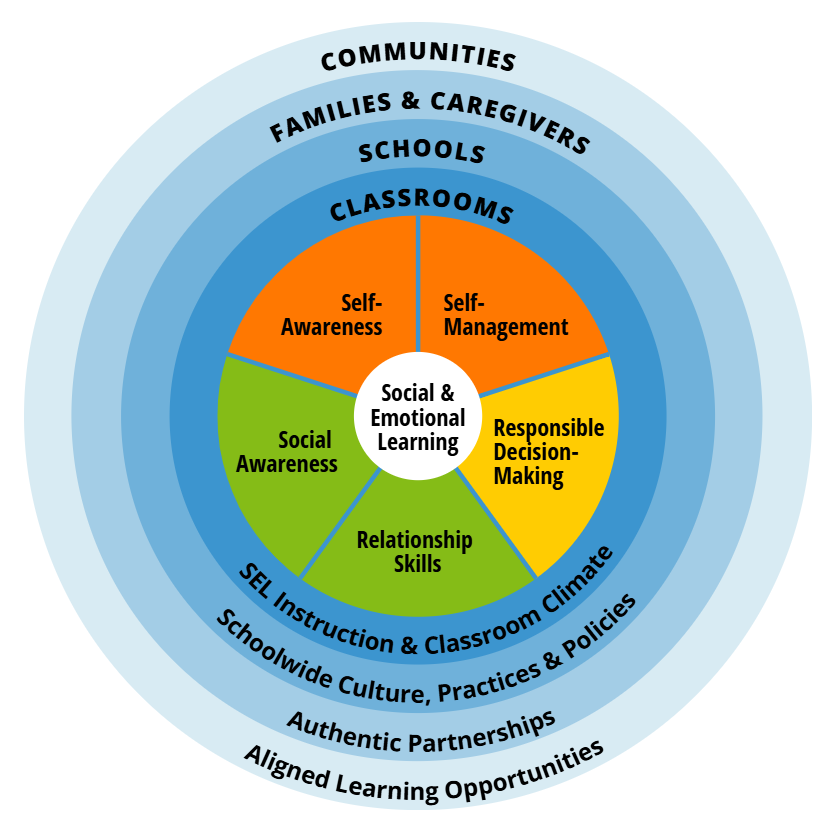
Connecting Through Colour progresses staff and students through three stages of social and emotional learning (SEL) in line with international best practice for SEL as outlined by CASEL. CASEL – the Collaborative for Academic, Social, and Emotional Learning – researches social and emotional learning for children and adults alike to create a more inclusive and just world. You can read about their work here: What Is the CASEL Framework? – CASEL
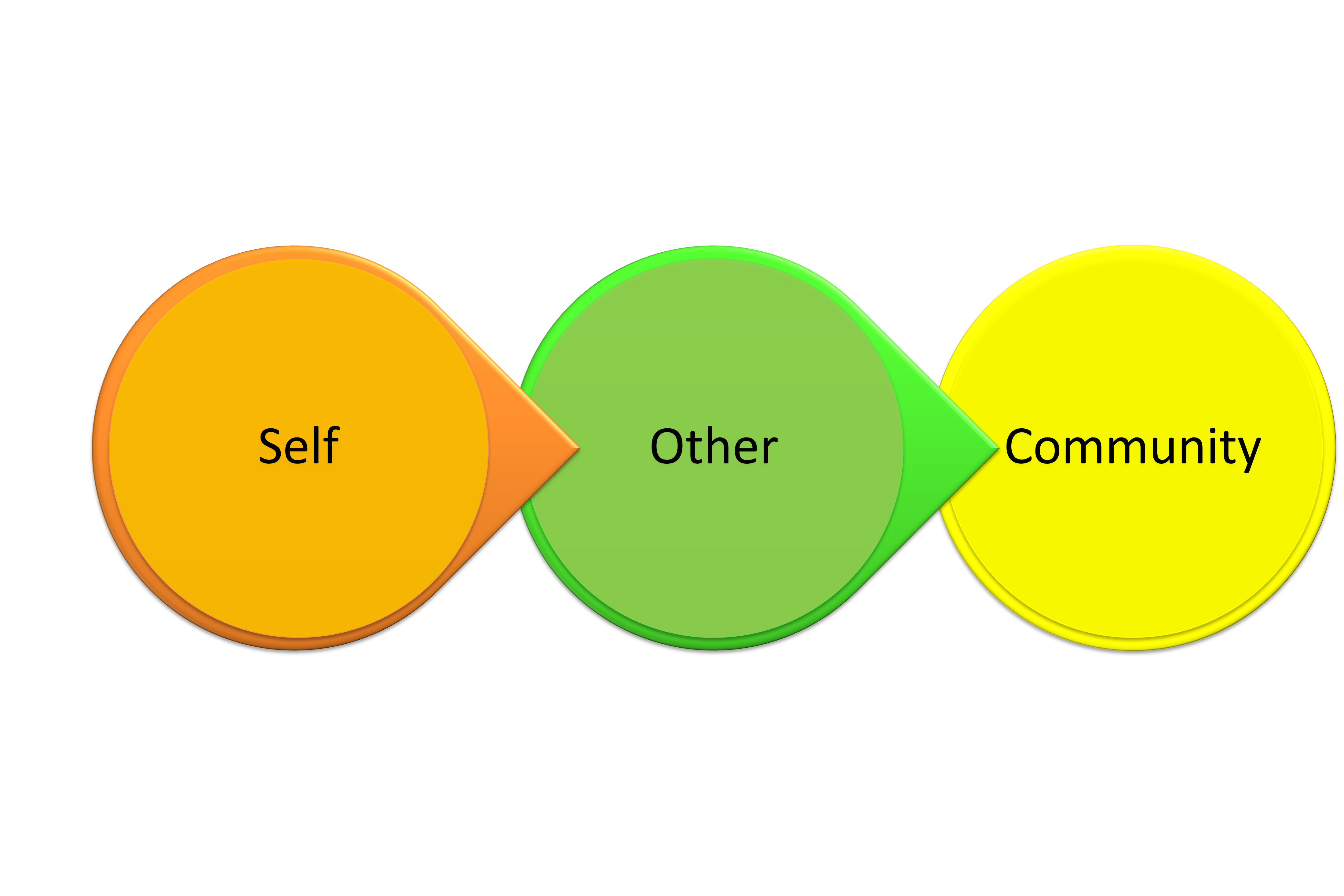
This progression begins with getting to know and understand oneself, before progressing onto thinking – and being curious – about others. The final focus rests on the emotions of the community.

First, both staff and students devote their efforts to understanding their individual and distinct emotional experiences. This process encompasses the cultivation of self-awareness regarding the uniqueness of their emotions, thoughts, and values, and how these elements influence their reactions in various contexts. Furthermore, it involves learning to engage with their distinct emotional selves through curiosity, compassion, and insight in a range of situations to attain personal goals and aspirations. Cipriano et al. (2023) discovered that programs emphasizing intrapersonal learning and development prior to addressing interpersonal learning and development demonstrate significantly greater effectiveness.

Next, staff and students learn how to connect with others by learning to be curious about the diverse emotions of other people. This includes developing the ability to hold others in mind, to notice and empathize with the emotional diversity of other members of the school community, and to challenge their assumptions and biases about the emotions of others.
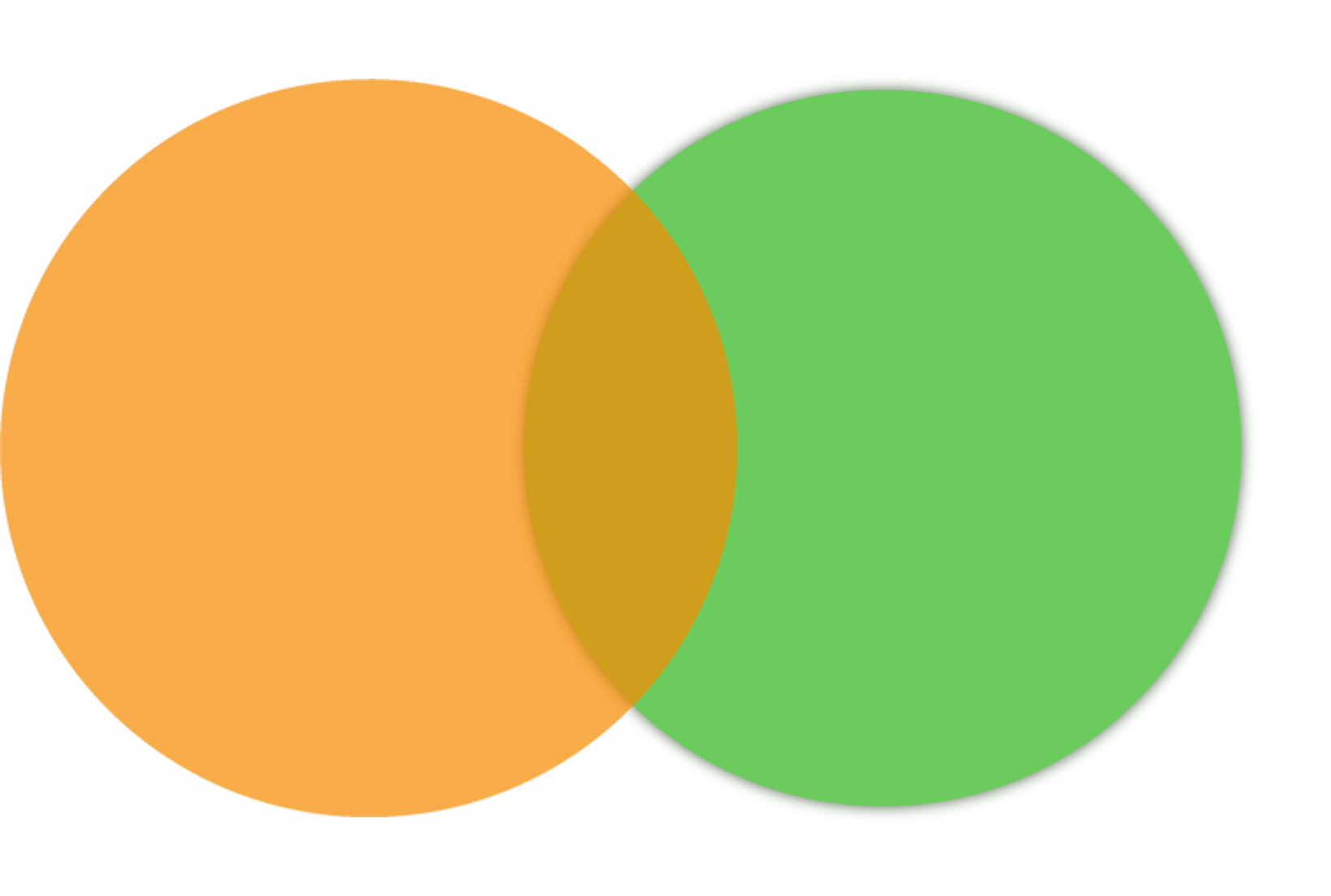
Then, the members of the school community develop their ability to understand how they each influence each other’s emotions, and how to use listening and being techniques to connect with, and support, each other.

In the final stage of Connecting Through Colour, staff and students learn about how the school environment influences – and is influenced by – their emotions and interactions, to support them to make caring and constructive choices. Older students now support the school’s values and emotional ethos by role modelling, by mentoring or by supporting the learning of younger students in their Connecting Through Colour sessions.
At this point, every member of the school community has the tools, skills and disposition to scaffold their internal reflections about emotions, to make better sense of their emotions in real-time, and to value the information their emotions offer. This brings every aspect of the connected school together into a cohesive community.
Will It Make A Difference?
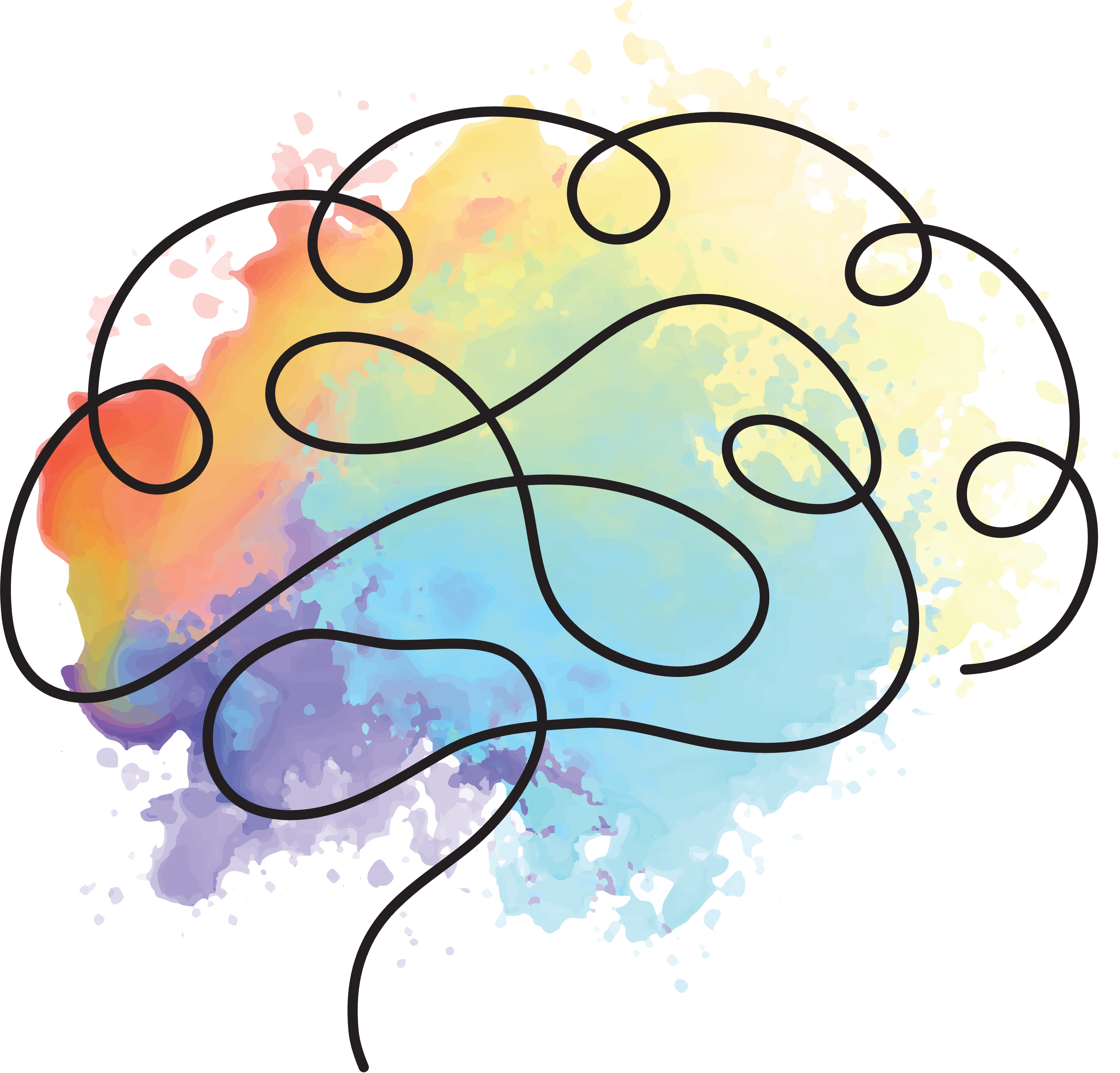
Over time, the practice of noticing the “colours” we are feeling, imagining the colours others might be experiencing, and reflecting on how these interact within the wider emotional life of the school, strengthens our internal scaffolding for self-regulation. In neuroscience terms, it helps us build the brain pathways that slow down automatic reactions and speed up deliberate thinking. The colours act not only as a shared entry point for reflection, but also as a vivid mental representation of the intersection between our own emotions and those of others—making the invisible processes of emotion and connection visible, tangible, and easier to work with. Hence – Connecting Through Colour!
Adapting for Inclusivity
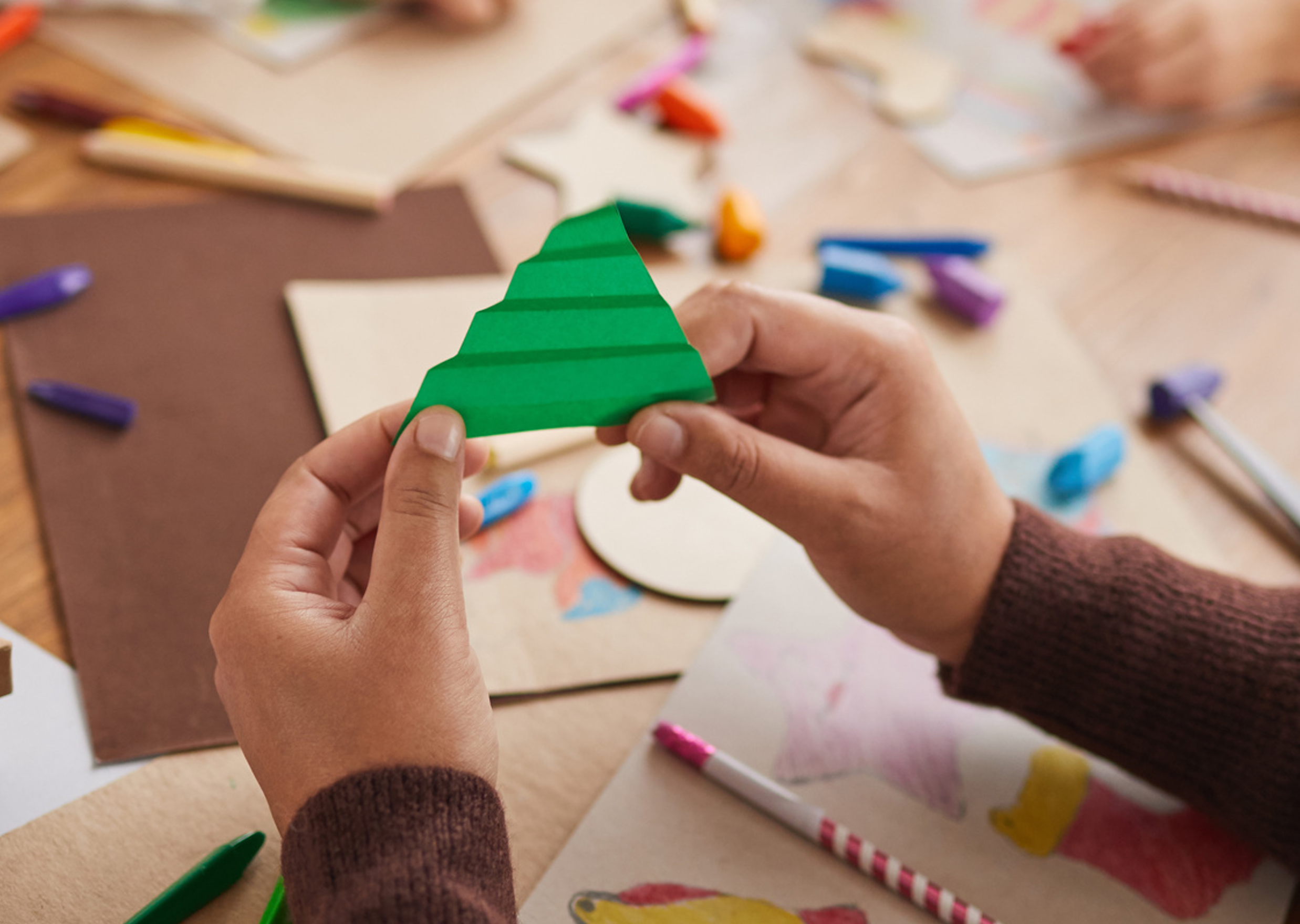
Whilst Connecting Through Colour focuses on the use of colour, this is intended as a metaphor and does not disadvantage students who are colour blind. For students with visual impairments who may benefit from alternative approaches, many of the activities can be adapted through other sensory inputs. For example, shapes, textures, smells and different materials can be used in place of colour, enabling visually impaired students to engage fully with the activities.
What Equipment Do We Need?


Most of the equipment needed for Connecting Through Colour is likely to already be available in your school, such as wipeboards and colouring pencils. Ideally, each student should have access to a complete set of colouring pencils to participate fully in the activities.
Every student will also need a colour chart which you can download here:
Additionally, you can contact your local DIY shop and ask for paint swatches, or make your own sets of swatches from off-cuts from your reprographics and art departments.
References
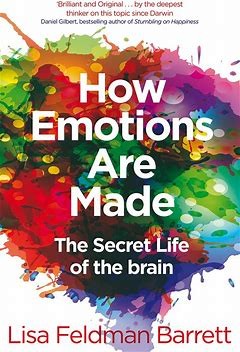
Barrett, L. F. (2018). How emotions are made: The secret life of the brain (Paperback edition). PAN Books.
Cipriano, C., Strambler, M. J., Naples, L. H., Ha, C., Kirk, M., Wood, M., Sehgal, K., Zieher, A. K., Eveleigh, A., McCarthy, M., Funaro, M., Ponnock, A., Chow, J. C., & Durlak, J. (2023). The state of evidence for social and emotional learning: A contemporary meta‐analysis of universal school‐based SEL interventions. Child Development, 94(5), 1181–1204. https://doi.org/10.1111/cdev.13968
Fordham, E. (2025). Adolescent ‘re-birth’ at puberty: Implications for the development of a relational pedagogy of ‘intentional care’. Pastoral Care in Education, 1–18. https://doi.org/10.1080/02643944.2025.2493185
Rifkin, R. F. (2012). Processing ochre in the Middle Stone Age: Testing the inference of prehistoric behaviours from actualistically derived experimental data. Journal of Anthropological Archaeology, 31(2), 174–195. https://doi.org/10.1016/j.jaa.2011.11.004
Siegel, D. J. (2014, January 23). The ESSENCE of Adolescence. Psychology Today. https://www.psychologytoday.com/us/blog/inspire-to-rewire/201401/the-essence-of-adolescence
 Connecting Through Colour